

How Attached Is My Dog?
Engage your students in an authentic research project involving citizen science and dogs. Students will have the opportunity to consider how dog behavior can be connected to their pet’s DNA. This information could be useful in placing rescue dogs with the best family or in helping predict which service dogs will make it through training.

Research Questions:
- Why are dogs different than wolves?
- Is hypersocial (attachment) behavior linked to extra DNA on chromosome 6?

Students Will:
- Collect a cheek sample for DNA extraction with InstaGene Matrix
- Set up a PCR Reaction using a Thermal Cycler
- Perform Gel Electrophoresis
- Determine the genotype of DNA samples
- Compare student data to larger sample size recorded in citizen science database

Lab Skills Learned:
- Micropipetting
- Sample collection
- DNA Extraction
- PCR Reactions
- Agarose Gel Electrophoresis
- Data analysis

This project was developed by the Biotechnology faculty at Southeast Community College and Neogen Corporation.
Teacher Training
If you are interested in bringing dog genetics to your classroom, we will be holding training sessions summer of 2026 with exact dates and locations TBD.
Meet the dogs of Nebraska EPSCoR
At Nebraska EPSCoR's Young Nebraska Scientist program, we believe science can be ruff work. So we are bringing in (wo)man's best friend to help. You heard that correctly, Science and Dogs! What could be better?! Here are our furry friends.
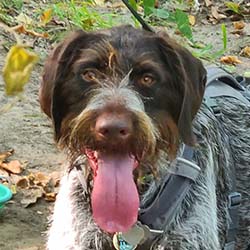
Kepler is a 6 year old German Wirehaired Pointer. He loves to splash in mud puddles and make a complete mess of himself and anything he touches.
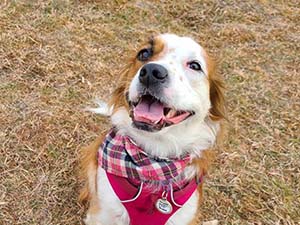
Franklin is a 8 year old Border Collie mix. She is originally a SoCal girl but enjoys the Nebraska life now. Franklin is a sassy genius who spends her free time trying to keep Kepler in line.